
In this story
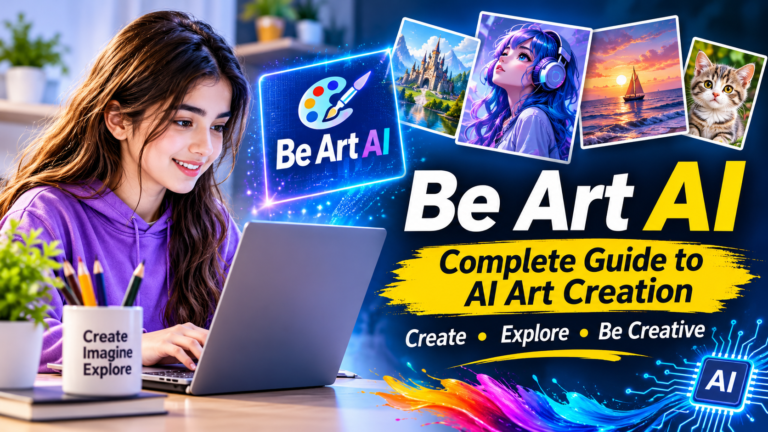
Artificial intelligence is changing the way people create digital content, edit images, improve photographs, and explore new creative ideas. Tools powered by AI are becoming easier to use, allowing beginners and experienced creators to complete tasks that once required advanced software skills. One platform that has attracted attention in the AI creativity space is BeArt AI.
BeArt AI is associated with AI-powered creative workflows that can help users explore image enhancement, artistic effects, photo editing, and other forms of digital creativity. The growing interest in AI creative platforms comes from the fact that users can experiment with different visual styles without needing to spend hours learning complicated editing software.
For photographers, social media creators, designers, students, bloggers, and everyday users, AI can make visual content creation faster and more accessible. Instead of starting every project from a blank canvas, users can use intelligent tools and automated features to transform an existing image or develop a creative concept.
This guide explains what BeArt AI is, how AI-powered creative platforms work, what features users may expect, how AI can improve creative workflows, and what users should consider before relying on an AI image or photo editing service.
What Is BeArt AI?
BeArt AI can be understood as part of the growing ecosystem of artificial intelligence tools designed for visual creativity. AI-based creative platforms use machine learning technologies to analyze images, recognize visual elements, apply transformations, and generate or enhance creative results.
Traditional photo editing usually requires users to understand multiple settings and tools. Brightness, contrast, color balance, sharpness, exposure, background adjustments, and artistic effects may all need to be changed manually. AI simplifies many of these processes by allowing software to automatically analyze an image and suggest or apply changes.
The main idea behind BeArt AI is connected to making creative editing more accessible. Instead of requiring advanced knowledge of professional editing applications, AI-based systems can provide automated assistance that helps users reach a desired visual result more quickly.
AI creativity is not limited to one type of user. A professional photographer may use AI to speed up repetitive editing tasks, while a beginner may use it simply to experiment with new visual styles. Social media users can also benefit from faster image improvements when preparing content for platforms where attractive visuals are important.
Why AI Is Becoming Important for Creative Work
The digital world has created a huge demand for visual content. Websites need images, businesses need promotional graphics, social media creators need posts and thumbnails, and individuals want better photographs for personal use.
Creating all of this content manually can take significant time. AI changes the process by automating some of the repetitive work.
Modern AI systems can identify objects, faces, backgrounds, colors, lighting conditions, and other elements inside an image. Based on this analysis, an AI tool can apply adjustments or provide creative transformations.
This makes platforms such as BeArt AI interesting to people who want to experiment with digital creativity without spending excessive amounts of time on technical editing.
AI can also help users discover creative possibilities they may not have considered. A normal photograph can potentially be transformed into an artistic image, enhanced for clarity, adjusted for a different mood, or prepared for a specific digital platform.
Understanding the Concept Behind BeArt AI
The technology behind AI-powered creative tools is generally based on machine learning and computer vision. These technologies allow software to analyze visual information and make decisions based on patterns learned from large amounts of data.
Computer vision helps an AI system understand what is present in an image. For example, it may recognize a person, background, object, sky, building, or other visual element. Once the system understands the image, it can perform specific editing operations.
Generative AI takes this idea further by producing new visual information based on instructions or existing content. Depending on the tool, users may be able to describe an idea in text and receive a visual result, or they may modify an existing image using AI-powered instructions.
The combination of image analysis, automation, and generative technology is what makes modern AI creative platforms powerful.
BeArt AI for Photo Enhancement
One of the most useful applications of AI is photo enhancement. Many photographs are captured in imperfect conditions. A picture may have poor lighting, low sharpness, unwanted noise, weak colors, or other issues.
AI-powered enhancement can analyze these problems and attempt to improve the overall appearance of an image.
For example, an enhancement system may improve image clarity while preserving important details. It may also adjust colors, contrast, exposure, or sharpness to create a more balanced result.
For users who take photographs with smartphones, this type of technology can be particularly useful. Modern phones already produce high-quality images, but difficult lighting conditions can still affect the final result.
With an AI-assisted workflow, users can experiment with different improvements without manually adjusting every setting.
BeArt AI and Artistic Creativity
AI is also becoming popular among people who want to create artistic images.
Instead of using traditional brushes and complicated editing techniques, users can experiment with AI-assisted artistic effects. A photograph can potentially be given a different visual mood or artistic appearance.
This can be useful for social media posts, creative projects, personal artwork, digital portfolios, and experimental photography.
The advantage of AI creativity is that users can explore ideas quickly. Someone who has never studied digital art can experiment with different styles and discover what looks appealing.
However, AI should be considered a creative assistant rather than a complete replacement for human creativity. The strongest results often come from combining human ideas with AI-powered tools.
BeArt AI for Social Media Content
Social media has made visual quality increasingly important. A post with an attractive image can receive more attention than a post with a low-quality or poorly edited visual.
Creators therefore spend considerable time editing photographs, preparing thumbnails, improving portraits, and creating visual content.
BeArt AI and similar AI-powered creative technologies can potentially make these workflows faster.
A creator can start with an existing photograph and use AI-assisted editing to improve its appearance. The final image can then be adapted for a social media post, profile picture, story, advertisement, or other digital format.
AI can also help creators experiment with different creative directions before choosing a final design.
BeArt AI for Beginners
One of the biggest advantages of AI creative platforms is accessibility.
Traditional professional editing applications can feel overwhelming to beginners because they contain many menus, controls, panels, and advanced features. A new user may need tutorials and practice before becoming comfortable with the software.
AI-powered tools can simplify this learning process.
Instead of manually adjusting every technical setting, users can often describe what they want or select an automated feature. This allows beginners to focus more on the creative result rather than the technical process.
For students and young creators who are learning digital creativity, AI can provide an easy way to experiment with image editing and visual design.
BeArt AI for Professional Creators
AI tools are not only useful for beginners. Professional creators can also benefit from automation.
Photographers, designers, marketers, and content creators often perform repetitive tasks. Even when someone is highly skilled, editing hundreds of images can consume a significant amount of time.
AI can assist with some repetitive processes and allow professionals to concentrate on more important creative decisions.
For example, a photographer may use AI-assisted enhancement as an early step in a larger editing workflow. A designer may use AI to explore concepts before developing a final design manually.
The value of AI for professionals is therefore not simply automation. It can also provide inspiration and speed up experimentation.
Creative Workflows With AI
A successful AI creative workflow usually begins with a clear goal.
Before using an AI tool, users should decide what they want to achieve. The goal might be improving a photograph, creating an artistic effect, preparing an image for social media, or experimenting with a new concept.
Once the goal is clear, users can choose the appropriate AI feature.
The next step is reviewing the result. AI-generated or AI-enhanced content should not automatically be considered perfect. Users should examine details, proportions, colors, facial features, backgrounds, and other important elements.
If the result does not match the original idea, adjustments may be necessary.
This human review stage is important because AI can sometimes produce unexpected results.
Image Quality and AI Enhancement
Image quality is an important factor when working with AI. The quality of the original image can influence the final result.
A clear and well-composed photograph gives an AI system better information to work with. Extremely blurry or heavily damaged images may be more difficult to enhance successfully.
AI enhancement should therefore be viewed as a helpful technology rather than magic.
Users should begin with the best available source image and avoid expecting perfect results from severely damaged photographs.
AI and Portrait Editing
Portrait editing is another area where AI technology can be useful.
People often want to improve portrait photographs for professional profiles, social media accounts, portfolios, or personal collections. AI can assist with lighting, clarity, background adjustments, and other visual improvements.
However, portrait editing should be handled carefully.
Over-editing can make a person look unnatural. The goal should usually be to improve the image while maintaining a realistic appearance.
Natural-looking results are often more attractive than extreme transformations, especially for professional photographs.
BeArt AI and Background Editing
Backgrounds can strongly influence the appearance of a photograph.
Sometimes a background is distracting, cluttered, or unsuitable for the intended purpose. AI-powered editing systems can help users isolate subjects and modify surrounding elements.
This can be particularly useful for product photographs, portraits, social media graphics, and promotional content.
Background editing can also help creators experiment with different environments without physically taking a new photograph.
For example, a subject photographed indoors may be presented against a cleaner digital background for a creative project.
BeArt AI and Digital Art
Digital art has changed significantly with the development of generative AI.
Artists can now use AI to explore concepts, generate inspiration, modify existing artwork, and experiment with visual styles.
BeArt AI fits into a broader movement where artificial intelligence is becoming another tool in the digital artist’s creative toolbox.
The most interesting aspect of AI art is the ability to explore many possibilities quickly. An artist can test different ideas without spending hours producing every variation manually.
At the same time, human creativity remains important. AI can generate possibilities, but the artist decides which direction is meaningful and how the final work should be developed.
Advantages of Using BeArt AI
AI-powered creative platforms offer several potential benefits.
One major advantage is speed. Tasks that may take considerable time manually can sometimes be completed much faster with AI assistance.
Another benefit is accessibility. Beginners can explore creative editing without mastering advanced software first.
AI also encourages experimentation. Users can try different styles and ideas without committing to a single approach.
Automation is another important advantage. Repetitive editing tasks can potentially be reduced, allowing users to spend more time on creative decisions.
AI tools can also support productivity for content creators who need to produce visual material regularly.
Limitations of AI Creative Tools
Although AI is powerful, it is not perfect.
AI systems can sometimes make mistakes. Faces, hands, text, objects, backgrounds, and small details may not always be represented correctly.
The quality of results can also depend on the original image and the specific AI technology being used.
Another consideration is originality. AI-generated content may sometimes resemble patterns or styles found in existing creative material. Users should think carefully about how they use AI-generated work, especially for commercial projects.
Privacy is another important consideration. Before uploading personal photographs or sensitive images to an online AI service, users should understand the platform’s privacy policies and data practices.
Privacy and Security Considerations
Privacy should always be considered when using online AI tools.
Images may contain personal information, private locations, family members, documents, or other sensitive details. Users should avoid uploading content that they do not want processed by an external service.
Before using any AI platform, it is useful to review its terms of service and privacy policy.
Users should also understand whether uploaded images are stored, how long they may be retained, and whether they can be deleted.
Responsible use of AI includes protecting personal information as well as creating attractive content.
BeArt AI and the Future of Creative Technology
The future of AI creativity is likely to become even more advanced.
AI systems are improving rapidly, and creative software is becoming more capable of understanding images, text, context, and user instructions.
Future AI tools may provide more precise editing controls while making the process easier for beginners.
We can also expect greater integration between AI and traditional creative software. Instead of using AI as a separate service, creators may increasingly find AI features built directly into photo editors, design applications, video software, and other creative platforms.
This could create a hybrid workflow in which humans provide creative direction while AI handles repetitive or technically difficult tasks.
BeArt AI for Content Creators
Content creators constantly need fresh visual material. Whether they create blog posts, YouTube thumbnails, Instagram posts, advertisements, or website graphics, visual content plays an important role.
AI can help creators develop content faster.
A creator might use AI enhancement to improve an existing photograph, experiment with artistic effects, or prepare an image for a particular platform.
This does not mean every piece of content should be completely generated by AI. Instead, AI can become one part of a broader content creation workflow.
The creator remains responsible for the concept, message, quality, and final presentation.
BeArt AI for Digital Marketing
Marketing has also been affected by AI.
Businesses need images for advertisements, websites, social media campaigns, email marketing, product promotions, and branding.
AI-powered creative tools can help marketers experiment with visual concepts quickly.
A marketing team can potentially create several variations of an image and compare which visual direction works best for a particular campaign.
This can make the creative testing process more efficient.
However, businesses should maintain brand consistency. AI-generated content should still match the company’s identity, audience, and communication style.
AI Creativity and Human Creativity
There is an ongoing discussion about whether AI will replace human creativity.
A better way to understand the technology is to see AI as an additional creative tool.
Human beings provide ideas, emotions, experiences, goals, and meaning. AI can process information and generate visual possibilities based on patterns.
The strongest creative workflows combine both.
A person can decide what they want to communicate, use AI to explore possible visual solutions, and then refine the selected result.
This approach keeps human creativity at the center while using technology to improve efficiency.
How to Get Better Results From AI Creative Tools
Clear instructions are important when using AI.
Users should describe their desired result as clearly as possible. Instead of using a vague instruction, they can explain the subject, visual style, mood, lighting, background, and overall purpose.
Starting with a good-quality image is also important when using enhancement tools.
Users should review every result instead of accepting the first version automatically.
Experimentation can also improve results. Trying different instructions or settings can help users understand what the AI system handles well.
Finally, users should maintain realistic expectations. AI is powerful, but no tool produces perfect results in every situation.
BeArt AI and Online Creativity
The growth of AI creative technology shows how quickly digital creativity is evolving.
People who once needed expensive equipment or advanced editing knowledge can now experiment with visual concepts using accessible online tools.
This shift is especially important for young creators and beginners.
Learning how to use AI responsibly can become a valuable digital skill. Understanding image quality, design principles, copyright, privacy, and creative decision-making is just as important as knowing how to operate the technology.
AI should make creativity easier, not remove the creative thinking behind the work.
Is BeArt AI Worth Exploring?
Whether BeArt AI is useful depends on what a user wants to accomplish.
Someone looking for AI-assisted creative experimentation may find this type of technology interesting. A photographer may be interested in image enhancement, while a social media creator may care more about artistic effects and fast content creation.
Beginners can benefit from the simplicity of AI-assisted workflows, while experienced creators can use AI to speed up repetitive processes.
Before choosing any AI platform, users should consider its available features, image quality, ease of use, pricing, privacy practices, and compatibility with their creative workflow.
For additional information about artificial intelligence and creative technology, users can also explore IBM’s AI resources to understand the broader technology behind modern AI applications.
BeArt AI Compared With Traditional Editing
Traditional editing gives users detailed manual control. This can be extremely useful for professionals who need precise adjustments.
AI editing focuses more on automation and intelligent assistance.
Neither approach is automatically better in every situation.
Traditional editing may be preferred when a designer needs exact control over every element. AI may be preferred when the goal is to complete a common task quickly or explore multiple creative options.
Many creators will likely use both approaches together.
AI can handle initial enhancement or idea generation, while traditional editing can be used for final refinement.
The Role of AI in the Future of Photography
Photography is one of the industries most affected by AI.
Modern cameras and smartphones already use computational photography to improve images automatically. AI is taking this process further by making editing and enhancement more intelligent.
In the future, photographers may spend less time correcting technical issues and more time focusing on composition, storytelling, and creative direction.
Tools such as BeArt AI represent the broader movement toward easier and more intelligent visual creation.
As the technology develops, the difference between photography, digital art, and AI-assisted creation may become increasingly flexible.
Responsible Use of AI-Generated Images
Responsible AI use is important for creators and businesses.
Users should avoid creating misleading content, impersonating real people, or presenting AI-generated images as authentic photographs when doing so could deceive others.
Copyright and licensing should also be considered when images are used commercially.
Creators should understand the rules of the platform they are using and the requirements of the websites where they publish their work.
Responsible use helps ensure that AI remains a useful creative technology rather than becoming a source of confusion or misuse.
Final Thoughts on BeArt AI
BeArt AI represents the growing role of artificial intelligence in modern visual creativity. AI-powered creative technologies are making image enhancement, artistic experimentation, and digital content creation more accessible to a wider audience.
The biggest advantage of AI is not simply that it can automate editing. Its real value comes from giving people more opportunities to experiment, learn, and turn ideas into visual content.
Beginners can use AI to explore creativity without mastering complicated software immediately. Professionals can use AI to speed up repetitive tasks and explore new concepts. Businesses can use AI-assisted creative workflows to develop visual marketing content more efficiently.
At the same time, users should remember that AI has limitations. Results should be reviewed carefully, privacy should be taken seriously, and creative decisions should remain under human control.
As artificial intelligence continues to develop, platforms and technologies connected with BeArt AI and the wider AI creativity ecosystem are likely to become an increasingly important part of digital content creation.
The future of creative work is not necessarily about humans versus AI. It is more likely to be about humans working with AI to create better, faster, and more innovative digital experiences.
Read More About : newsreverse com