
Introduction
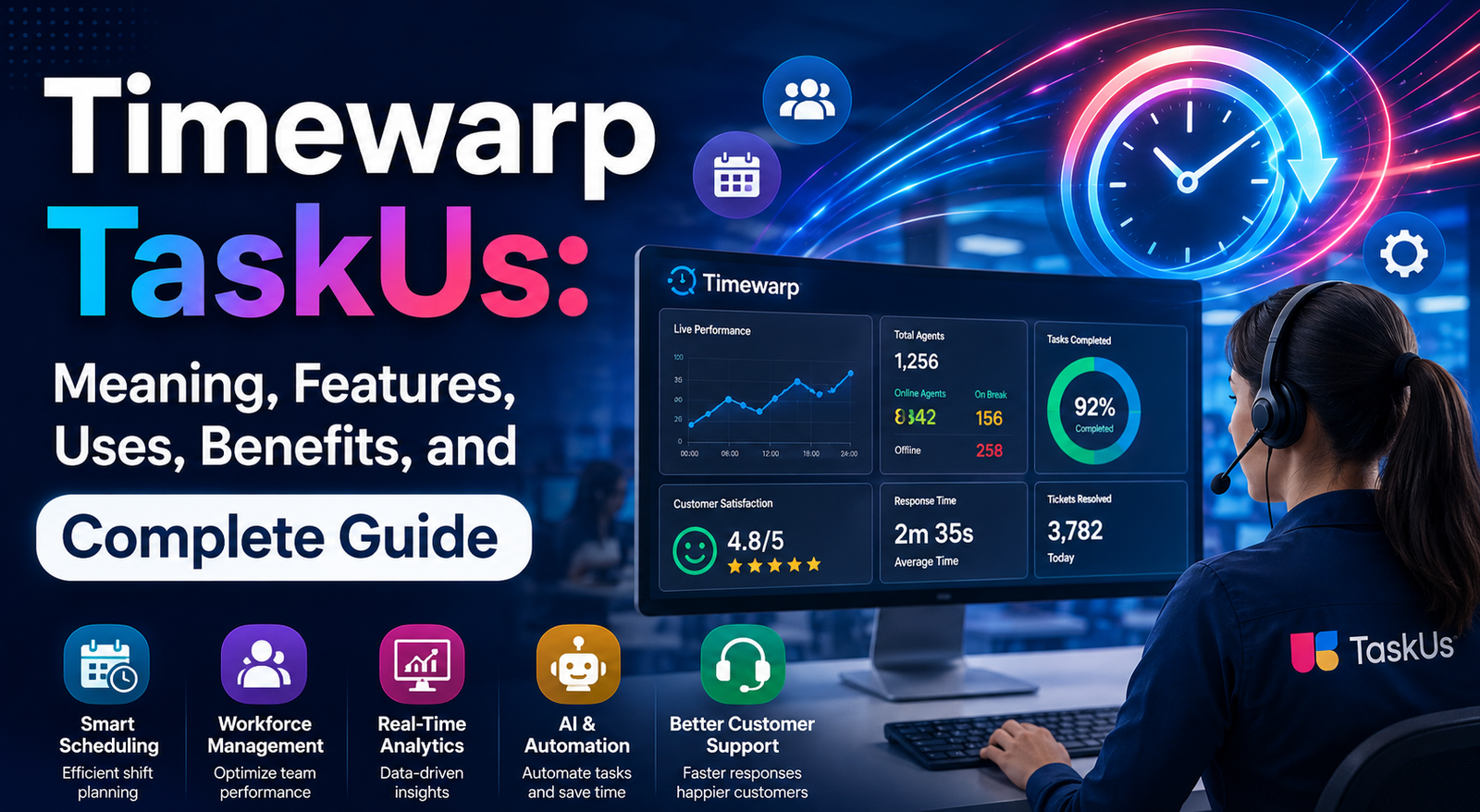
The outsourcing and customer support industry has changed rapidly in recent years. Businesses are now expected to provide faster responses, better customer experiences, improved communication, and reliable support across different locations and time zones. As organizations grow, managing employees, schedules, workloads, customer interactions, and operational performance becomes increasingly complex. This is where terms such as Timewarp TaskUs attract attention online.
People searching for Timewarp TaskUs may be looking for information related to time management, workforce operations, productivity, scheduling, customer support technology, automation, or internal systems associated with a large business process outsourcing environment. However, it is important to understand the term carefully. Timewarp TaskUs should not automatically be treated as the name of a publicly confirmed standalone software product unless an official source specifically verifies that claim. Instead, the term can be discussed in the broader context of modern workforce management, time tracking, workflow optimization, digital customer support, and automation.
This complete guide explains the possible meaning of Timewarp TaskUs, how similar systems work, their features, potential benefits, challenges, and their possible role in the future of outsourcing and digital operations. The purpose is to provide readers with a clear and balanced understanding of the keyword while avoiding unsupported claims.
What Is Timewarp TaskUs?
Timewarp TaskUs is a keyword and phrase that may be connected with discussions about TaskUs-related operations, workforce productivity, scheduling, time management, and customer support technology. The phrase combines the idea of Timewarp, which may suggest speed, time optimization, scheduling, tracking, or workflow efficiency, with TaskUs, a company associated with the business process outsourcing and digital services industry.
When people search for Timewarp TaskUs, they may be trying to understand an internal tool, workflow concept, time-management system, employee platform, productivity process, or technology-related discussion connected to large-scale customer support operations. Because modern outsourcing organizations manage large workforces, they often rely on different types of digital systems to support scheduling, attendance management, performance reporting, task allocation, customer support operations, workflow monitoring, data analysis, automation, communication, and productivity measurement.
Therefore, Timewarp TaskUs can be understood as a phrase connected to the broader idea of making time, work, and operations more organized and efficient. The keyword is especially relevant in discussions about modern workplaces where businesses use technology to improve operational planning and manage large volumes of work.
Read more about:consolemagazine com
Understanding the Meaning of Timewarp in a Business Environment
The word Timewarp naturally creates an image of moving through time faster. In a business environment, however, the concept can be understood in a more practical way. Businesses are always searching for ways to complete work more efficiently, reduce unnecessary delays, avoid repetitive tasks, organize employee schedules, and improve the speed of customer service.
A Timewarp-style approach to operations may focus on making work more organized and improving the way employees, managers, and digital systems interact with daily business processes. The goal is not simply to make employees work faster. A modern productivity system should help organizations work smarter by improving planning, reducing unnecessary administrative work, and providing better visibility into operations.
This idea is particularly important in large outsourcing environments where thousands of customer interactions may take place every day. A small delay in one process can sometimes affect the performance of an entire support operation. For this reason, businesses increasingly use workforce management systems, analytics platforms, automation tools, and communication technologies to improve the overall flow of work.
The Connection Between Timewarp TaskUs and Workforce Management
One of the most useful ways to understand Timewarp TaskUs is through the concept of workforce management. Workforce management refers to the process of organizing people and resources so that a business can operate efficiently. In customer support and outsourcing environments, this can involve scheduling employees, managing attendance, distributing workloads, reviewing performance trends, and planning staffing requirements.
Shift scheduling is an important part of workforce management. Employees may work during different hours depending on customer demand, business location, and international time zones. A scheduling system can help managers organize morning, evening, and overnight shifts while also considering remote work arrangements, peak-hour coverage, and employee availability. Proper scheduling can reduce confusion and help ensure that enough employees are available when customer demand increases.
Attendance management can also play an important role in business operations. Organizations need accurate information about working hours and employee availability. Digital systems may help businesses maintain organized records of shifts, working hours, schedule changes, and other operational information.
Workload distribution is another major part of modern workforce planning. Customer support teams may receive different numbers of requests throughout the day. A sudden increase in customer inquiries can create pressure on employees and affect service quality. Workforce management systems can help organizations understand where additional resources may be needed and allow managers to respond more effectively to changing business conditions.
Performance reporting can provide additional insight into business operations. Managers may review information related to response times, work volume, customer satisfaction, resolution trends, queue activity, and staffing requirements. When used responsibly, this information can help organizations identify areas where processes may need improvement.
How Timewarp-Style Systems Can Work
A modern workforce or productivity system usually brings several operational processes together. An employee may access an appropriate work platform and review an assigned schedule or set of responsibilities. The system or manager may then identify the work that requires attention. Depending on the organization, this work may involve customer support requests, administrative tasks, technical assistance, data processing, or back-office responsibilities.
As employees perform their assigned work, business systems may collect relevant operational information for management and reporting purposes. Managers can then review performance trends and operational requirements to understand where improvements may be needed. The organization may use this information to improve scheduling, training, workflow design, or resource planning.
This type of process demonstrates why a term like Timewarp TaskUs may be associated with productivity and operational efficiency. The central idea is to create a more organized connection between people, tasks, schedules, and business technology.
Why Time Management Matters in the BPO Industry
Time management is extremely important in the business process outsourcing industry. A customer support operation may serve customers from several countries and manage interactions through phone calls, email, live chat, social media, messaging platforms, and support tickets. The number of customer requests can change quickly depending on business conditions.
For example, an online shopping platform may experience a sudden increase in customer inquiries because of a major sale, website problems, delivery delays, product issues, or payment errors. If the company does not have effective workforce planning, customers may experience longer waiting times and employees may become overwhelmed.
This is why workforce planning, scheduling, automation, and analytics are important parts of modern operations. Businesses need to understand when customer demand is likely to increase and how available resources can be managed effectively. The broader idea behind Timewarp TaskUs can therefore be connected to making large-scale operations more organized, responsive, and adaptable.
Key Features Associated With Modern Productivity Systems
Modern workforce and productivity systems can include a range of features designed to support business operations. Digital scheduling is one important feature because it helps organizations organize employee shifts without relying completely on manual spreadsheets. Centralized scheduling can improve visibility, reduce confusion, and allow managers to update plans more efficiently when business requirements change.
Real-time operational visibility is another valuable capability. Modern businesses often need current information about customer demand, support queues, work volume, and available resources. Dashboards and reporting systems can help managers understand what is happening across an operation and make decisions based on available information.
Workflow automation is also becoming increasingly important. Some repetitive processes can be supported through automation, such as sending routine notifications, organizing incoming requests, updating appropriate records, routing support inquiries, and generating reports. This can allow employees to spend more time on responsibilities that require human judgment, communication, and problem-solving.
Data analytics helps organizations understand patterns within their operations. Businesses may use available information to identify busy periods, common customer problems, workflow delays, and areas where processes could be improved. Analytics should support better decision-making rather than simply collecting unnecessary information.
Communication and collaboration tools are also important because large teams need effective ways to share information. Employees and managers may need to communicate about tasks, updates, customer issues, schedule changes, and operational requirements. Better communication can reduce misunderstandings and improve workflow coordination.
Timewarp TaskUs and Customer Support Operations
Customer support is one of the most important areas where efficient time management can make a significant difference. Customers generally expect fast responses, clear information, accurate solutions, and consistent communication. When customer requests increase, businesses need systems that help teams remain organized.
A modern customer support environment may use technology to receive customer requests, identify the type of issue, route the request to an appropriate process, provide relevant information to support employees, and escalate complex situations when necessary. The outcome may also be recorded for future analysis and process improvement.
This combination of people, processes, and technology is an important part of modern outsourcing operations. The concept behind Timewarp TaskUs can therefore be linked with improving the speed, coordination, and organization of customer support processes.
AI and Automation in Modern Business Operations
Artificial intelligence is changing the way businesses approach productivity and customer support. Traditional automation generally follows fixed instructions, while AI-powered systems may be capable of processing information and supporting more flexible workflows. However, it is important not to assume that every system described online as AI is an advanced autonomous platform.
Modern AI can potentially support customer service assistance, information retrieval, content classification, data analysis, workflow support, document processing, and routine task automation. The strongest approach usually combines technology with appropriate human oversight.
Employees remain important because many situations require judgment, empathy, critical thinking, business knowledge, and accountability. Technology can support efficiency, but human expertise continues to play a major role in complex business environments.
Chatbots and AI Agents
The technology landscape has moved beyond basic rule-based chatbots. A traditional chatbot may be designed to answer common questions by following predefined instructions. It can be useful for handling simple and predictable customer inquiries, but complex situations may require additional support.
More advanced AI systems may potentially assist with complex workflows when they are properly designed and connected to appropriate tools and permissions. The important difference is between simply providing information and supporting the completion of a broader workflow.
Businesses should carefully evaluate AI systems rather than assuming that every chatbot can perform complex tasks. Responsible implementation requires clear processes, appropriate access controls, testing, monitoring, and human oversight where necessary.
Benefits of a Timewarp-Style Productivity Approach
A well-designed productivity approach can provide several potential benefits to an organization. Improved organization is one of the most important advantages because employees and managers can have better visibility into schedules, responsibilities, and business priorities. This can reduce confusion and improve coordination.
Better resource planning can help businesses review customer demand and staffing requirements more effectively. Instead of making decisions only after problems occur, managers may use available information to identify potential operational needs earlier.
Faster operational decisions may also be possible when managers have access to accurate and relevant information. Delays can sometimes occur because decision-makers do not have a clear understanding of current business conditions. Better visibility can help organizations respond more effectively.
Automation may reduce repetitive work by supporting routine processes. This can allow employees to focus more on responsibilities that require human communication, creativity, and judgment.
Improved customer experience is another potential benefit. When operations are organized effectively, businesses may be better positioned to provide faster and more consistent support.
Scalability is also important. As a business grows, manual processes may become increasingly difficult to manage. Digital systems can help organizations coordinate larger teams and more complex operations.
Manual Management and Modern Digital Systems
Traditional manual management often depends heavily on spreadsheets, individual records, and time-consuming updates. While these methods can work for small teams, they may become more difficult to manage as an organization expands.
Modern digital systems can provide centralized planning, faster reporting, better operational visibility, and potential automation. Scheduling may become easier to manage when relevant information is available in a centralized system. Reporting can also become more efficient when data is organized and analyzed through appropriate technology.
Workload planning may improve because managers have better visibility into operational trends. Communication can also become more organized when teams use appropriate collaboration systems. Digital tools do not automatically solve every business problem, but well-designed systems can improve consistency and operational efficiency.
Challenges and Limitations
A balanced discussion of Timewarp TaskUs should also consider potential challenges. Employee privacy is an important issue whenever workplace technology collects information. Organizations should consider transparency, applicable laws, data protection requirements, and appropriate access controls.
Over-monitoring can negatively affect employee trust and workplace experience. The purpose of workforce technology should be operational improvement rather than unnecessary surveillance. Businesses should establish clear policies and use technology responsibly.
Technical problems can also occur. Digital platforms may experience system downtime, integration problems, data errors, and software issues. Organizations need reliable technical support and appropriate backup procedures.
Training requirements should also be considered. Employees and managers may need time and guidance before they can use new systems effectively. Technology adoption is often more successful when organizations provide clear explanations and practical training.
Over-reliance on automation is another possible limitation. Automation can be valuable, but it should not completely replace human judgment in situations where human review is important. A balanced approach can help businesses use technology without ignoring the value of experienced employees.
How Businesses Can Use Modern Workforce Technology Effectively
Businesses should first identify the main operational problem they want to solve. Technology should not be adopted simply because it is new or popular. An organization may need to improve scheduling, customer response times, workflow coordination, reporting, or communication.
A clear use case can help businesses select appropriate technology. Employees should also understand how a new system works and why it is being introduced. Clear communication can improve adoption and reduce confusion.
Organizations should measure meaningful results after implementing new technology. Useful areas of evaluation may include service quality, response times, operational efficiency, and customer feedback. Technology should be reviewed according to whether it actually improves business outcomes.
Human oversight should remain part of important decision-making processes. Technology can support employees and managers, but organizations still need accountability and responsible leadership.
The Future of Timewarp-Style Workforce Management
Workforce technology is likely to continue evolving as businesses adopt new forms of automation, analytics, and AI support. Predictive planning may help organizations use historical information to estimate future workload requirements and prepare for changing customer demand.
Automation tools may also become more capable of supporting routine workflows. AI systems may help employees find relevant information and complete certain tasks more efficiently. Digital platforms are likely to continue supporting remote and internationally distributed teams.
The future may involve more personalized workflows that can adapt to different business requirements. However, successful workplace technology will continue to depend on the combination of technology, human expertise, and responsible management.
Technology can improve efficiency, but long-term success depends on how effectively an organization manages people, processes, and digital tools together.
Is Timewarp TaskUs an Official Software?
This is an important question because people should be careful when searching for unfamiliar technology-related keywords online. The term Timewarp TaskUs should not automatically be assumed to represent an officially confirmed standalone software product simply because websites describe it that way.
Different online articles may use different interpretations of the keyword. Some may describe it as a productivity system, while others may discuss workforce management, time tracking, customer support technology, or AI-related automation. These descriptions may not always refer to the same officially documented product.
For this reason, readers should always verify the official product name, official provider, login requirements, data policies, and website authenticity before entering personal or work-related information into an unfamiliar platform.
Why People Search for Timewarp TaskUs
There can be several possible reasons why people search for Timewarp TaskUs. Some users may be looking for information related to workplace systems or employee processes. Others may be researching how outsourcing companies use productivity technology and workforce management systems.
Some people may also associate the keyword with AI, automation, and modern customer support technology. Website owners and content creators may search for the phrase because it appears in keyword research tools or search trends.
Understanding search intent is important when creating useful content. A high-quality article should answer the reader’s actual questions instead of simply repeating the keyword. Helpful content should explain the possible meaning of the phrase, discuss the relevant business context, and clearly distinguish verified information from general interpretation.
Frequently Asked Questions About Timewarp TaskUs
What is Timewarp TaskUs?
Timewarp TaskUs is a phrase associated with discussions about time management, workforce productivity, scheduling, customer support operations, and technology in an outsourcing-related context.
Is Timewarp TaskUs an official software product?
The phrase should not automatically be treated as a publicly confirmed standalone software product without verification from an official source.
What is the possible purpose of a Timewarp-style system?
A Timewarp-style system may focus on improving scheduling, workflow organization, productivity, reporting, and operational efficiency.
How can workforce management help customer support teams?
Workforce management can help organizations plan staffing, manage workloads, reduce scheduling conflicts, and respond to changing customer demand.
Can AI improve customer support?
AI can potentially assist with routine inquiries, information processing, workflow support, and automation. Human oversight remains important for complex situations.
Why is time management important in outsourcing?
Outsourcing companies often manage large numbers of employees and customer interactions. Effective time and workforce management can improve organization and service delivery.
Can automation replace human employees completely?
Automation can support repetitive tasks, but human expertise remains important for judgment, creativity, empathy, accountability, and complex decision-making.
What should users verify before using an unfamiliar workplace platform?
Users should verify the official provider, website authenticity, access requirements, privacy policies, and data protection practices before using an unfamiliar platform.
Conclusion
Timewarp TaskUs is an interesting keyword because it brings together several major themes in modern business operations, including time management, workforce productivity, customer support, automation, analytics, and digital transformation.
Rather than making unsupported assumptions about the term, it is more useful to understand Timewarp TaskUs within the broader context of how modern organizations manage people, processes, and technology. Large customer support and outsourcing operations require effective scheduling, clear workflows, reliable communication, accurate reporting, and responsible technology use.
Digital workforce management and automation systems can help organizations meet these requirements when implemented carefully. The future of productivity will likely involve smarter technology, improved automation, better data analysis, and more advanced AI support. However, successful organizations will continue to need skilled people, responsible management, and strong operational planning.
Ultimately, the idea behind Timewarp TaskUs can be connected to a simple business goal: using the right combination of people, processes, and technology to make work more organized, efficient, and adaptable. A high-quality approach should always prioritize accuracy, transparency, security, employee trust, and customer experience.
Technology can improve the speed and organization of work, but long-term success depends on how responsibly and effectively that technology is used. By combining digital tools with human expertise and effective management, businesses can create more efficient operations while continuing to focus on the people they serve.